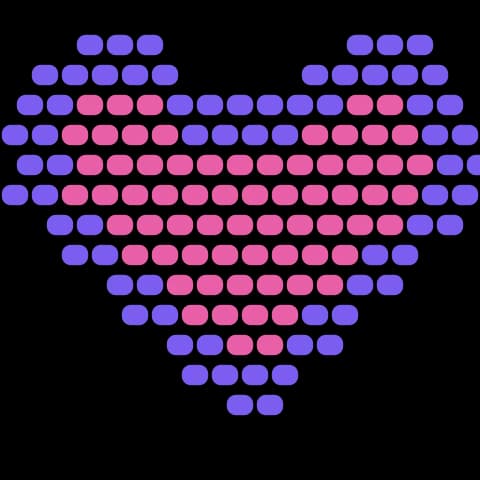
 Hama, Perler & fuse beads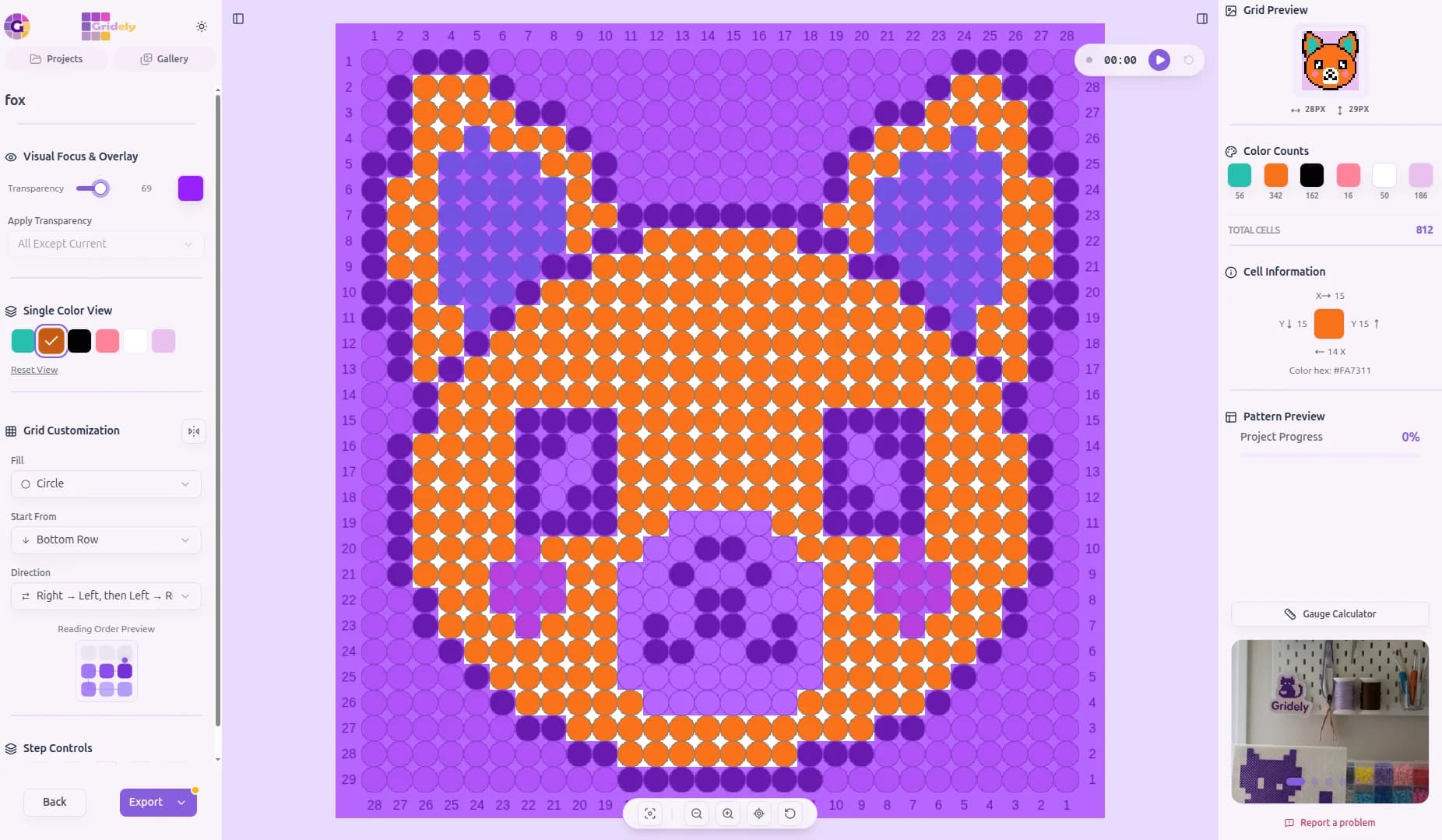
Start from a simple image
At 29 beads across, a face has room for two eyes and a mouth, not eyelashes. The images that convert best have one subject, bold shapes and strong contrast: a logo, a cartoon character, a pet silhouette. Crop tightly so every bead goes on the subject.
Detailed photos need more beads to read. If you want a portrait, plan on several boards joined together and keep the colour count low.
Size the design in boards
Pegboards come in fixed sizes, so think in boards rather than centimetres. A large square midi board is 29 × 29 pegs; widths of 29, 58 or 87 beads use whole boards with nothing wasted. Use the table below to see how big the finished piece will be for each bead size.
Fewer colours, cleaner result
Bead colours come in steps, not gradients. A design with 8 to 15 colours usually looks sharper than one with 30, and it is far easier to sort. Convert with a low colour count, then hand-fix the outline: a dark one-bead border around the subject makes it pop from across the room.
Remove single stray beads of a colour that appears nowhere nearby. They are fiddly to place and invisible once ironed.
Matching real bead colours
Screens and plastic never match perfectly, and there is no built-in Hama or Perler colour list yet. Edit each palette colour to the bead closest to it in your collection, and check skin tones and greys against real beads before you commit.
| Bead size | Bead width | Finished width |
|---|---|---|
| Mini (Hama mini, Artkal C) | 2.5–2.6 mm | about 13 cm (5 in) |
| Midi (Hama midi, Perler, Artkal S) | 5 mm | about 25 cm (10 in) |
| Maxi (Hama maxi, Perler Biggie) | 10 mm | about 50 cm (20 in) |